How Poor Presentation Can Undermine a Home’s Value
by Carmen
Staging has become an expected part of selling a home.
Most sellers understand that a well-presented space attracts more attention, photographs better, and ultimately sells faster. But there’s a side of staging that is discussed far less:
What happens when staging is done poorly?
Because not all staging adds value. In some cases, it can actually reduce it.
In today’s market, the question is no longer whether a home is staged. The question is how it is staged.
Beyond “Staged vs. Unstaged”
In today’s market, the question is no longer whether a home is staged.
The question is how it is staged.
Because the difference between thoughtful, design-led staging and superficial placement of furniture is immediately perceptible — particularly to today’s buyer, who is more visually literate than ever.
This is not a subtle distinction.
It is the difference between a home that feels composed… and one that feels assembled.
The Illusion of Completion
There is a growing tendency to equate staging with completion:
A sofa is placed. A rug is added. Artwork is hung.
The room is “done.”
But completion is not the goal.
Resolution is.
A resolved space feels effortless, balanced, and intentional. An unresolved one — no matter how many pieces it contains — feels unsettled.
And that distinction directly impacts perceived value.
The Subtle Signals Buyers Pick Up
Buyers may not walk through a home and say, “the rug is too small” or “the artwork is incorrectly placed.”
But they do feel when something is off.
Common issues I see:
Coffee tables that are far too small for the seating area
Furniture that doesn’t match the scale of the room
Rugs that fail to anchor furniture and just “float” in the room
Artwork that is undersized or hung too high
Pieces that feel overly trendy rather than timeless
Individually, these choices seem minor. Together, they create a powerful impression: This home feels lifeless.
One of the fastest ways staging can diminish a space is by misapplying scale.
The “Mismatch Effect”
Another issue I commonly see is what I call the mismatch effect:
A homeowner’s large, traditional sofa paired with a small, modern coffee table
Compact dining furniture placed in a generously sized room
Accessories that don’t relate in scale, style, or tone
These combinations create visual tension. And tension does not sell homes.
Buyers are drawn to spaces that feel resolved — where everything appears intentional and connected.
When “Budget” Becomes Visible
Working within a budget should never be the problem. In fact, thoughtful budget staging can be very effective.
The issue arises when budget becomes visible.
When furniture, art, and accessories are chosen purely to meet a price point rather than a design standard, the result can feel:
Inconsistent
Underwhelming
Lacking in cohesion
And once buyers notice the staging, they stop focusing on the home.
Once buyers notice the staging, they stop focusing on the home
The Risk of Filling Every Room
One of the most common mistakes is trying to stage everything. The intention is good: create a complete experience.
But when the budget is spread too thin, the result is most often dilution.
Five partially staged rooms rarely outperform one or two rooms (ideally the living room and primary bedroom) that feel complete, balanced, and elevated.
In fact it’s worth remembering that an empty room feels neutral while a poorly staged room feels unsettled.
Where Value Is Won (or Lost)
If budget is a consideration, the question should never be:
“How many rooms can we stage?”
Instead, ask:
“Where will a composed staging have the greatest impact?”
Because one beautifully resolved space elevates the entire home. Multiple underwhelming ones can do the opposite.
Presentation is one of the most powerful tools in real estate marketing — everything else depends on it: pricing, promotion and process
Final Thought
Presentation is one of the most powerful tools in real estate marketing — everything else depends on it: pricing, promotion and process (showings, negotiations, offers).
When done well, it enhances value, builds confidence, and creates emotional connection.
When done poorly, it introduces doubt.
And in real estate, even subtle doubt can affect how buyers perceive and price a home.
A Next Step
If you’re preparing to stage and unsure where to invest — or if you’d like to confirm whether your current plan is elevating or undermining your presentation — an objective staging consultation can provide clarity.
Stage Right Rental’s complimentary Concierge Service may be able to help.
Or, if you’d like to strengthen your own staging skills, the hands-on workshops at the Stage Right Academy Studio offer practical, real-world guidance. •

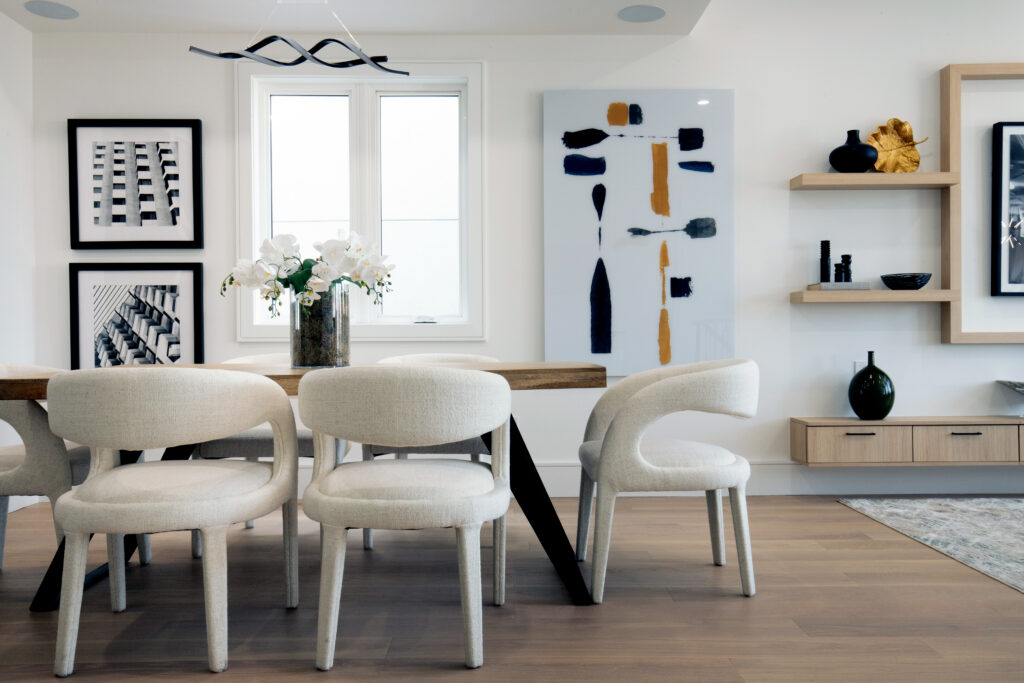
When Staging Backfires
How Poor Presentation Can Undermine a Home’s Value
by Carmen
Staging has become an expected part of selling a home.
Most sellers understand that a well-presented space attracts more attention, photographs better, and ultimately sells faster. But there’s a side of staging that is discussed far less:
What happens when staging is done poorly?
Because not all staging adds value. In some cases, it can actually reduce it.
Beyond “Staged vs. Unstaged”
In today’s market, the question is no longer whether a home is staged.
The question is how it is staged.
Because the difference between thoughtful, design-led staging and superficial placement of furniture is immediately perceptible — particularly to today’s buyer, who is more visually literate than ever.
This is not a subtle distinction.
It is the difference between a home that feels composed… and one that feels assembled.
The Illusion of Completion
There is a growing tendency to equate staging with completion:
A sofa is placed.
A rug is added.
Artwork is hung.
The room is “done.”
But completion is not the goal.
Resolution is.
A resolved space feels effortless, balanced, and intentional. An unresolved one — no matter how many pieces it contains — feels unsettled.
And that distinction directly impacts perceived value.
The Subtle Signals Buyers Pick Up
Buyers may not walk through a home and say, “the rug is too small” or “the artwork is incorrectly placed.”
But they do feel when something is off.
Common issues I see:
Individually, these choices seem minor. Together, they create a powerful impression: This home feels lifeless.
One of the fastest ways staging can diminish a space is by misapplying scale.
The “Mismatch Effect”
Another issue I commonly see is what I call the mismatch effect:
These combinations create visual tension. And tension does not sell homes.
Buyers are drawn to spaces that feel resolved — where everything appears intentional and connected.
When “Budget” Becomes Visible
Working within a budget should never be the problem. In fact, thoughtful budget staging can be very effective.
The issue arises when budget becomes visible.
When furniture, art, and accessories are chosen purely to meet a price point rather than a design standard, the result can feel:
And once buyers notice the staging, they stop focusing on the home.
The Risk of Filling Every Room
One of the most common mistakes is trying to stage everything. The intention is good: create a complete experience.
But when the budget is spread too thin, the result is most often dilution.
Five partially staged rooms rarely outperform one or two rooms (ideally the living room and primary bedroom) that feel complete, balanced, and elevated.
In fact it’s worth remembering that an empty room feels neutral while a poorly staged room feels unsettled.
Where Value Is Won (or Lost)
If budget is a consideration, the question should never be:
“How many rooms can we stage?”
Instead, ask:
“Where will a composed staging have the greatest impact?”
Focus on:
Execute those spaces well — with the right scale, balance, and presence.
Because one beautifully resolved space elevates the entire home. Multiple underwhelming ones can do the opposite.
Final Thought
Presentation is one of the most powerful tools in real estate marketing — everything else depends on it: pricing, promotion and process (showings, negotiations, offers).
When done well, it enhances value, builds confidence, and creates emotional connection.
When done poorly, it introduces doubt.
And in real estate, even subtle doubt can affect how buyers perceive and price a home.
A Next Step
If you’re preparing to stage and unsure where to invest — or if you’d like to confirm whether your current plan is elevating or undermining your presentation — an objective staging consultation can provide clarity.
Stage Right Rental’s complimentary Concierge Service may be able to help.
Or, if you’d like to strengthen your own staging skills, the hands-on workshops at the Stage Right Academy Studio offer practical, real-world guidance. •
Other things you can do next…
Review our new Concierge Service
Explore our new Before/After Showcase
Review our DIY Staging Guide for Real Estate Agents
Visit Stage Right Academy to further explore presentation strategy