When you delve deeper into the art of staging, it becomes evident that the process is more than mere decoration — it’s about storytelling, creating a narrative that potential buyers can see themselves being a part of.
The selection of a particular style, or a blend thereof, is crucial in setting the stage for this narrative. Let’s explore how each style contributes to the staging process and the nuances involved in blending them effectively.
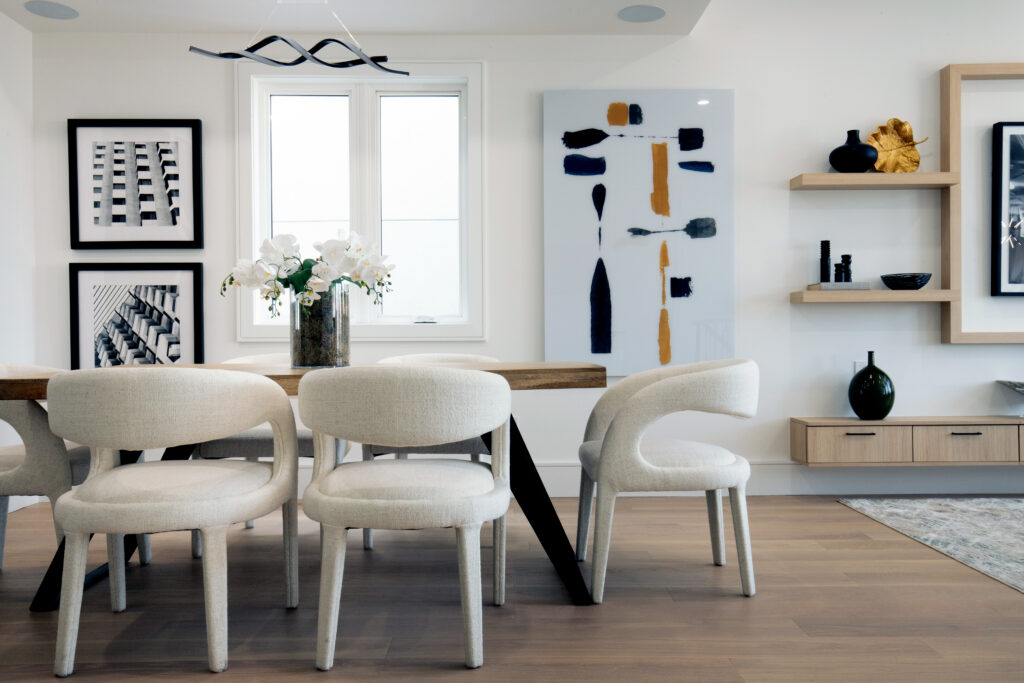
Transitional Style is about marrying the comfort and warmth of traditional design with the clean lines and subdued palette of contemporary style. This approach is incredibly effective in staging because it appeals to a wide range of buyers. It’s about striking the right balance between ornate and streamlined elements, creating spaces that feel both sophisticated and accessible.
Key Design Points
Merges traditional and contemporary elements.
Features neutral colors and varied textures.
Achieves a balanced, inviting look.
Simple, streamlined furnishings.
Mix of textures and materials.
Focus on comfort and livability.
Traditional Style offers a sense of stability and heritage, appealing to buyers looking for a home with a timeless feel. The challenge lies in modernizing traditional spaces without losing their classic appeal. Integrating just a few modern pieces of furniture, contemporary art, modern lighting fixtures and blending current colours with toss cushions and accessories can achieve this balance, making the space more relatable to today’s buyer while retaining its elegance.
Key Design Points
Draws on classic European aesthetics.
Features rich materials like wood, silk, and velvet.
Prioritizes symmetry and formal arrangements.
Modern/Contemporary Style is about embracing minimalism and open-concept living, which are highly sought after in today’s market. Staging a home in this style should focus on decluttering, using sleek furniture, and highlighting architectural features. This style can make spaces feel larger and more airy, an attractive aspect for buyers.
However, it’s important not to veer too far into stark minimalism, as maintaining a balance with traditional elements can broaden its appeal. Introducing touches of warmth through soft textiles, classic wood tones, and subtle color can create a welcoming atmosphere that resonates with a wider audience. By blending modern simplicity with traditional comfort, you can craft a space that feels both innovative and timeless, appealing to a diverse range of tastes and preferences.
Key Design Points
Focused on clean lines and simplicity.
Values open spaces and functional design.
Uses neutral colors with bold accents.
Minimalist Style takes the principles of modern design further by emphasizing the “less is more” philosophy. Staging a minimalist home involves careful selection of pieces that serve both functional and aesthetic purposes, creating a space that feels both expansive and inviting. The challenge is to ensure the home still feels warm and livable, avoiding a too stark or sterile appearance.
To achieve this balance, incorporating greenery can breathe life into the space, adding vibrancy and a sense of calm. Layering different textures through rugs, throws, and cushions can introduce depth and warmth, making the minimalistic space more approachable. Subtle incorporation of art or decor with soft, natural tones can further enhance the space’s appeal, ensuring it remains welcoming while adhering to minimalist principles. These additions help soften the minimalism, making the home appealing to a broader range of buyers by showcasing a lifestyle that’s both simplified and enriched.
Key Design Points
Highlights functionality and simplicity.
Employs a restrained color palette and minimal furniture.
Aims for clean, uncluttered spaces.
Industrial Style leverages raw materials and rugged textures to create a space with character and strength. In staging, it’s important to soften these elements with textiles and greenery to ensure the home feels welcoming. Industrial-style lighting and furniture can add a chic, urban edge to the space, appealing to buyers looking for a modern, loft-like feel.
Incorporating plush fabrics, high-quality leathers, and metallic accents can elevate the aesthetic, providing a sophisticated contrast to the industrial backdrop. This careful calibration ensures the space not only retains its unique industrial charm but also exudes a cozy, luxurious vibe that can captivate a wider audience, blending raw authenticity with refined elegance.
Key Design Points
Echoes the look of industrial settings.
Incorporates exposed brick, metal, and concrete.
Offers a utilitarian, raw aesthetic.
Mid-Century Modern Style combines form and function with unique shapes and vibrant colors. Staging a home in this style can attract buyers with an appreciation for retro aesthetics combined with modern comfort. The key is to balance mid-century pieces with contemporary design elements for a fresh, cohesive look.
This approach allows for a nod to the nostalgic charm of the era while maintaining a broad appeal through a more neutral background. Such a strategy ensures the home remains versatile and appealing to a wide range of tastes, making the mid-century modern flair an accent rather than the focal point.
Key Design Points
Celebrates mid-20th-century design.
Features functional furniture, clean lines, and organic shapes.
Combines warm woods with bold colors.
Scandinavian Style emphasizes light, simplicity, and natural beauty, creating serene and functional spaces. When staging a home in this style, focus on maximizing natural light, using soft colors, and incorporating elements like wood and wool to add warmth. This style can make a home feel peaceful and inviting.
Key Design Points
Focuses on simplicity, functionality, and natural materials.
Prefers light, muted color palettes.
Creates cozy, minimalist spaces.
Bohemian Style is ideal for showcasing creativity and eclectic tastes. However, when staging a home, it’s crucial to balance this style’s vibrancy and variety with cohesion and harmony. Curated collections and carefully chosen color schemes can convey a bohemian feel without overwhelming potential buyers.
Key Design Points
Is eclectic and colorful.
Mixes patterns, textures, and hues for a relaxed vibe.
Encourages a carefree, artistic look.
Rustic Style brings the outdoors in, creating a cozy, grounded atmosphere. Staging with this style involves using natural materials and earthy tones while ensuring the space doesn’t become too cabin-like or dated. Modern rustic, which blends traditional rustic elements with modern design, can appeal to a broad audience.
Key Design Points
Inspired by the countryside and natural elements.
Utilizes rough-hewn wood and stone.
Creates a warm, welcoming atmosphere.
Coastal Design style with its emphasis on light, airy colors and natural textures, creates a serene and inviting atmosphere ideal for staging. By incorporating elements such as soft blues, sandy neutrals, and sun-bleached woods, it evokes a relaxed, beach-house vibe that appeals to buyers looking for a tranquil retreat. This style works exceptionally well in staging because it maximizes natural light and promotes a sense of spaciousness and calm, making properties more attractive to potential buyers seeking a peaceful home environment.
Key Design Points
Inspired by the seaside.
Uses light, breezy colors and natural materials.
Emphasizes casual, airy furnishings.
Art Deco style, characterized by its bold geometric patterns, rich colors, and luxurious materials, adds a touch of glamour and sophistication to home staging. Incorporating elements like mirrored furnishings, metallic accents, and vibrant artwork can transform a space into an elegant and stylish environment that captures buyers’ attention. This style is particularly effective in staging because it creates a memorable and distinctive space, appealing to those who value both historical richness and modern luxury in their home.
Key Design Points
Glamorous, with roots in the 1920s-1930s.
Incorporates geometric shapes, bold colors, and luxurious materials.
Celebrates symmetry and decorative flair.
Farmhouse style, with its rustic charm and emphasis on comfort and simplicity, brings a warm and welcoming atmosphere to home staging. By integrating natural wood textures, vintage accents, and a neutral color palette, it creates spaces that feel both lived-in and inviting. This approach is highly effective in staging, as it appeals to buyers looking for a cozy, family-friendly home, making them more easily envision their lives unfolding within its walls.
Key Design Points
Evokes the charm of rural farmhouses.
Blends rustic elements with modern touches.
Uses a neutral palette with color accents.
Effective Blending of Styles
The key to successfully blending these styles in staging is understanding the architectural and historical context of the home, as well as the target market’s preferences. For example, a historic home might benefit from a blend of traditional and modern elements, highlighting its character while appealing to contemporary sensibilities. Conversely, a new construction might be staged with a mix of modern and mid-century modern elements to add warmth and personality.
Incorporating elements from different styles requires a keen eye for design and a deep understanding of balance, proportion, and color theory. It’s not about randomly mixing pieces from different eras but rather about creating a cohesive look that feels intentional and harmonious.
Ultimately, the goal of staging is to create a space where potential buyers can envision building their lives. By thoughtfully selecting and blending styles, stagers can craft universally appealing homes that stand out in the real estate market, making the narrative of “home” accessible and inviting to everyone.

Design Style Reference Guide
When you delve deeper into the art of staging, it becomes evident that the process is more than mere decoration — it’s about storytelling, creating a narrative that potential buyers can see themselves being a part of.
The selection of a particular style, or a blend thereof, is crucial in setting the stage for this narrative. Let’s explore how each style contributes to the staging process and the nuances involved in blending them effectively.
The styles covered here:
Transitional
Traditional
Modern/Contemporary
Minimalist
Industrial
Mid-Century Modern
Scandinavian
Bohemian
Rustic
Coastal Design
Art Deco
Farmhouse
Transitional Style is about marrying the comfort and warmth of traditional design with the clean lines and subdued palette of contemporary style. This approach is incredibly effective in staging because it appeals to a wide range of buyers. It’s about striking the right balance between ornate and streamlined elements, creating spaces that feel both sophisticated and accessible.
Key Design Points
Traditional Style offers a sense of stability and heritage, appealing to buyers looking for a home with a timeless feel. The challenge lies in modernizing traditional spaces without losing their classic appeal. Integrating just a few modern pieces of furniture, contemporary art, modern lighting fixtures and blending current colours with toss cushions and accessories can achieve this balance, making the space more relatable to today’s buyer while retaining its elegance.
Key Design Points
Modern/Contemporary Style is about embracing minimalism and open-concept living, which are highly sought after in today’s market. Staging a home in this style should focus on decluttering, using sleek furniture, and highlighting architectural features. This style can make spaces feel larger and more airy, an attractive aspect for buyers.
However, it’s important not to veer too far into stark minimalism, as maintaining a balance with traditional elements can broaden its appeal. Introducing touches of warmth through soft textiles, classic wood tones, and subtle color can create a welcoming atmosphere that resonates with a wider audience. By blending modern simplicity with traditional comfort, you can craft a space that feels both innovative and timeless, appealing to a diverse range of tastes and preferences.
Key Design Points
Minimalist Style takes the principles of modern design further by emphasizing the “less is more” philosophy. Staging a minimalist home involves careful selection of pieces that serve both functional and aesthetic purposes, creating a space that feels both expansive and inviting. The challenge is to ensure the home still feels warm and livable, avoiding a too stark or sterile appearance.
To achieve this balance, incorporating greenery can breathe life into the space, adding vibrancy and a sense of calm. Layering different textures through rugs, throws, and cushions can introduce depth and warmth, making the minimalistic space more approachable. Subtle incorporation of art or decor with soft, natural tones can further enhance the space’s appeal, ensuring it remains welcoming while adhering to minimalist principles. These additions help soften the minimalism, making the home appealing to a broader range of buyers by showcasing a lifestyle that’s both simplified and enriched.
Key Design Points
Industrial Style leverages raw materials and rugged textures to create a space with character and strength. In staging, it’s important to soften these elements with textiles and greenery to ensure the home feels welcoming. Industrial-style lighting and furniture can add a chic, urban edge to the space, appealing to buyers looking for a modern, loft-like feel.
Incorporating plush fabrics, high-quality leathers, and metallic accents can elevate the aesthetic, providing a sophisticated contrast to the industrial backdrop. This careful calibration ensures the space not only retains its unique industrial charm but also exudes a cozy, luxurious vibe that can captivate a wider audience, blending raw authenticity with refined elegance.
Key Design Points
Mid-Century Modern Style combines form and function with unique shapes and vibrant colors. Staging a home in this style can attract buyers with an appreciation for retro aesthetics combined with modern comfort. The key is to balance mid-century pieces with contemporary design elements for a fresh, cohesive look.
This approach allows for a nod to the nostalgic charm of the era while maintaining a broad appeal through a more neutral background. Such a strategy ensures the home remains versatile and appealing to a wide range of tastes, making the mid-century modern flair an accent rather than the focal point.
Key Design Points
Scandinavian Style emphasizes light, simplicity, and natural beauty, creating serene and functional spaces. When staging a home in this style, focus on maximizing natural light, using soft colors, and incorporating elements like wood and wool to add warmth. This style can make a home feel peaceful and inviting.
Key Design Points
Bohemian Style is ideal for showcasing creativity and eclectic tastes. However, when staging a home, it’s crucial to balance this style’s vibrancy and variety with cohesion and harmony. Curated collections and carefully chosen color schemes can convey a bohemian feel without overwhelming potential buyers.
Key Design Points
Rustic Style brings the outdoors in, creating a cozy, grounded atmosphere. Staging with this style involves using natural materials and earthy tones while ensuring the space doesn’t become too cabin-like or dated. Modern rustic, which blends traditional rustic elements with modern design, can appeal to a broad audience.
Key Design Points
Coastal Design style with its emphasis on light, airy colors and natural textures, creates a serene and inviting atmosphere ideal for staging. By incorporating elements such as soft blues, sandy neutrals, and sun-bleached woods, it evokes a relaxed, beach-house vibe that appeals to buyers looking for a tranquil retreat. This style works exceptionally well in staging because it maximizes natural light and promotes a sense of spaciousness and calm, making properties more attractive to potential buyers seeking a peaceful home environment.
Key Design Points
Art Deco style, characterized by its bold geometric patterns, rich colors, and luxurious materials, adds a touch of glamour and sophistication to home staging. Incorporating elements like mirrored furnishings, metallic accents, and vibrant artwork can transform a space into an elegant and stylish environment that captures buyers’ attention. This style is particularly effective in staging because it creates a memorable and distinctive space, appealing to those who value both historical richness and modern luxury in their home.
Key Design Points
Farmhouse style, with its rustic charm and emphasis on comfort and simplicity, brings a warm and welcoming atmosphere to home staging. By integrating natural wood textures, vintage accents, and a neutral color palette, it creates spaces that feel both lived-in and inviting. This approach is highly effective in staging, as it appeals to buyers looking for a cozy, family-friendly home, making them more easily envision their lives unfolding within its walls.
Key Design Points
Effective Blending of Styles
The key to successfully blending these styles in staging is understanding the architectural and historical context of the home, as well as the target market’s preferences. For example, a historic home might benefit from a blend of traditional and modern elements, highlighting its character while appealing to contemporary sensibilities. Conversely, a new construction might be staged with a mix of modern and mid-century modern elements to add warmth and personality.
Incorporating elements from different styles requires a keen eye for design and a deep understanding of balance, proportion, and color theory. It’s not about randomly mixing pieces from different eras but rather about creating a cohesive look that feels intentional and harmonious.
Ultimately, the goal of staging is to create a space where potential buyers can envision building their lives. By thoughtfully selecting and blending styles, stagers can craft universally appealing homes that stand out in the real estate market, making the narrative of “home” accessible and inviting to everyone.